
Add more detail to your appointment
A record we can revisit
The image becomes part of your eye-health record and helps with future comparison.
Quick and non-contact
You look into the camera while we capture the image, with no contact on the eye.
Works with the full test
Photography adds detail, but it doesn't replace the wider sight and health checks.
A clearer record of the back of the eye
Some patients want more than a standard examination alone, especially when they value having a visual record they can return to later. Digital retinal photography creates an image of the back of the eye for your clinical notes, giving us a closer view of retinal structures and a useful reference point for spotting changes over time. The process is straightforward and non-contact. You simply look into the camera while the image is captured. That makes it an accessible way to add detail without turning the appointment into something complicated or uncomfortable, while still keeping the focus on understanding your eye health clearly.
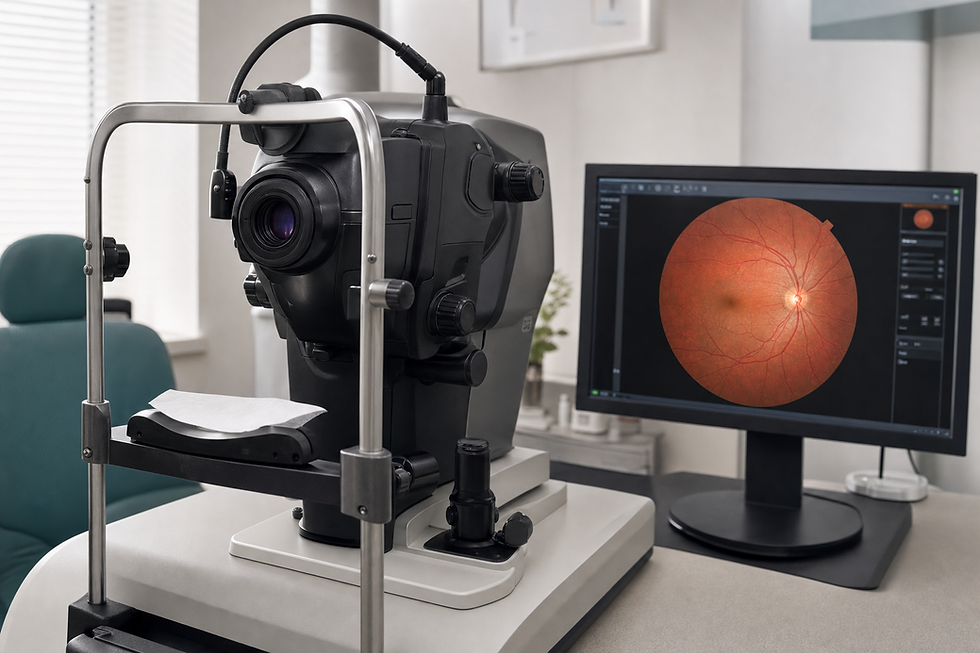
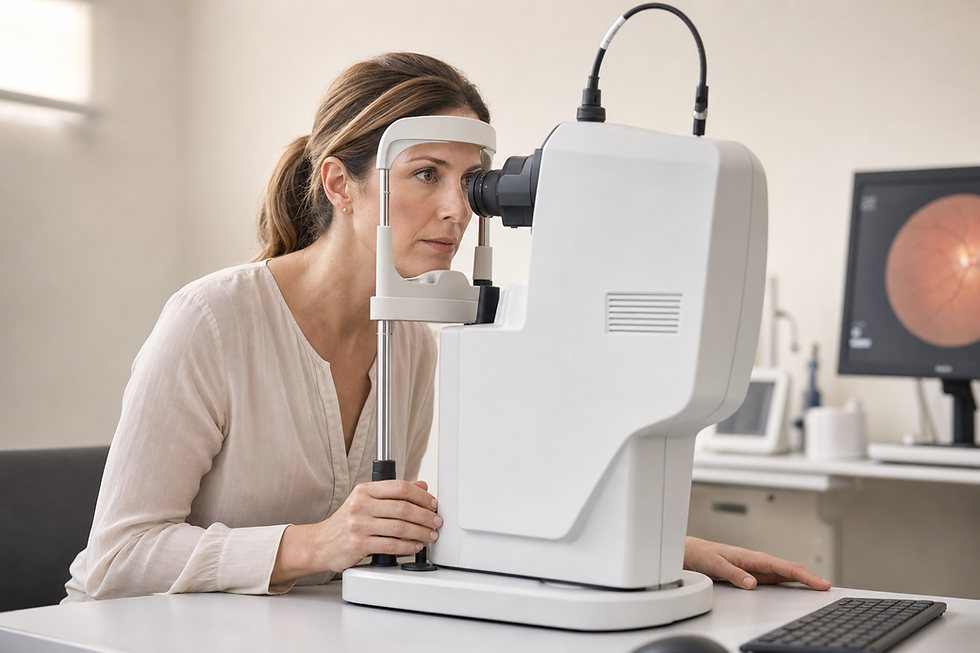
An enhancement to your sight test
Retinal photography supports an eye test, but it doesn't replace the wider examination. We still assess vision, eye health and any symptoms that matter to you. The image sits alongside those findings and can be especially helpful if you'd like a more detailed visual record as part of your care. The add-on costs £10, so it's a clear, optional choice rather than something hidden in the background. If you're someone who likes having fuller information explained properly, this can be a useful extra when you come in for your next sight test.
Frequently asked questions
How much does retinal photography cost?
Digital retinal photography is available as a £10 add-on to your sight test. It remains a separate option, so you can decide whether you'd like the extra image record alongside the wider examination and explanation of the findings.
Does retinal photography replace an eye test?
No. Retinal photography adds a detailed image of the back of the eye, but it is only one part of the bigger picture. We still carry out the wider sight test and eye-health assessment, then explain how the image fits into the overall findings.
What happens during the imaging process?
The process is quick and non-contact. We ask you to look into the camera while the image is taken, and it is then added to your clinical record. Most patients find it straightforward, with the main benefit being a clearer reference for future comparison.